
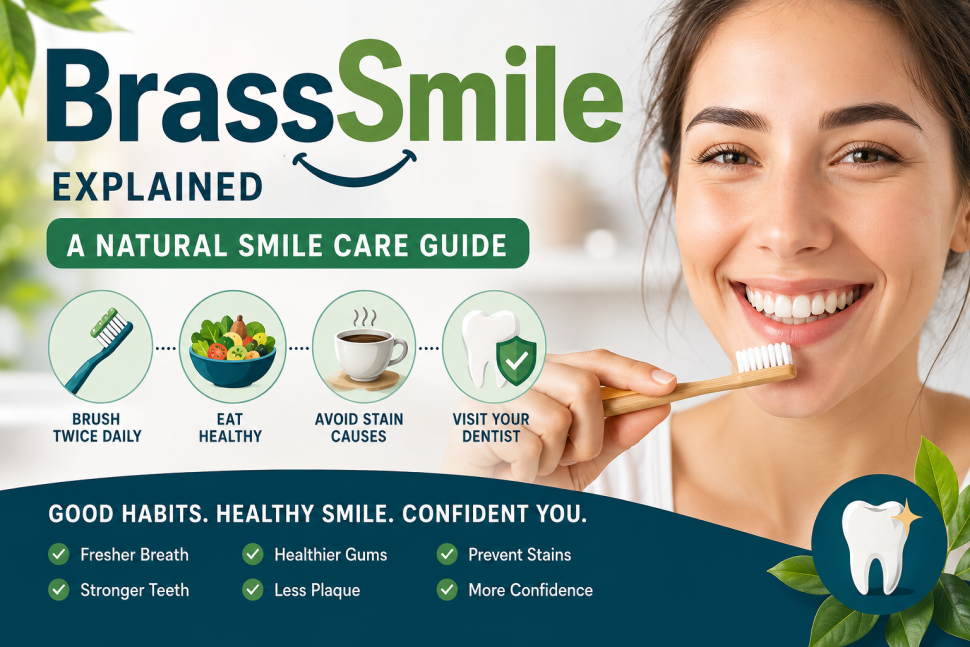
BrassSmile Explained: A Natural Smile Care Guide
BrassSmile is a simple, habit-focused approach to everyday smile care. If you’ve searched for “BrassSmile,” you might be wondering whether it’s a product, a clinic, or a recognized dental treatment. In reality, it’s best understood as a label for everyday habits like brushing properly, being mindful of your diet, cutting back on common stain-causers, and keeping up with regular dental visits.
There are no miracle kits or overnight fixes involved. The focus is on consistent care, prevention, and maintaining a healthy-looking smile over time. In this guide, we’ll explain what BrassSmile means, the habits behind it, what you can realistically expect, how it compares with professional dental care, and how to build a simple routine around it
What Does BrassSmile Even Mean
You’re not booking an appointment for it. You won’t spot it on a pharmacy shelf either, no matter how long you look. It’s more of an idea than an actual product, and honestly the idea itself is pretty simple: a good smile gets built day by day. Not fixed overnight with some cosmetic shortcut someone’s selling you.
Think of your smile as a running tally of the last few months of your life. How you brush. What you snack on. Whether you’re actually drinking enough water or just telling yourself you are. Whether you smoke. Get the small stuff right often enough and that tally slowly tips in your favor. There’s no deeper trick buried underneath it – that’s genuinely all there is to it.
The Actual Habits Behind It
None of this is secret information. Most people already know it. They just don’t stick with it, which is a different problem entirely.
Brush properly – twice a day, a full two minutes, fluoride toothpaste. Most of us blast through it in maybe thirty seconds and call it a job well done.
Eat with your teeth in mind, at least some of the time. A balanced diet supports oral health generally, while sugary or acidic food and drinks, eaten constantly, tend to work against you.
Cut back on the obvious offenders – coffee, tea, red wine, cigarettes. Nobody’s telling you to quit cold turkey overnight. Just be a little more aware of how often it’s happening.
Keep going to the dentist. This is the one that gets skipped constantly, and no home routine, however disciplined, actually replaces a real checkup.
None of it’s groundbreaking. If BrassSmile does anything differently at all, it’s bundling this into one routine people can actually remember, rather than a dozen scattered tips you read once on some forum and forgot about a week later.
What You Actually Notice
Stick with it a while and a few things start to shift. Stains stop piling up as fast as they used to. Breath tends to stay fresher, teeth feel cleaner day to day – nothing dramatic, just noticeably better. These habits also tend to support healthier gums and less plaque buildup over time, and cavity risk generally drops with them. There’s a confidence angle too, one people underrate. Not thinking about your teeth every single time you smile at someone is honestly a bigger deal than it sounds.
That said – and I won’t oversell this part – if you’ve already got deep staining, cracked enamel, or teeth that genuinely need straightening, this routine isn’t undoing any of that by itself. It’s prevention, not repair. Maintenance. That’s the honest ceiling here.
How It Stacks Up Against Seeing an Actual Dentist
People ask this constantly: does BrassSmile replace a dentist? No. It never claimed to, not even once. Think of it as the foundation, with actual dental treatment being the floors you build on top whenever you actually need them.
| What you’re looking at | BrassSmile (daily habits) | Professional treatment |
| Cost | Cheap – mostly your own time and effort | Costs more, and clinic visits add up fast |
| Speed | Gradual | Usually faster |
| Where it shines | Prevention and day-to-day upkeep | Actual dental problems needing treatment |
| Long haul | Needs daily follow-through | Can still need ongoing upkeep too |
Putting Together an Actual Routine
Here’s roughly what a realistic week looks like if you’re actually doing this and not just nodding along.
Mornings: brush for a full two minutes. Set a timer if you have to – most people undershoot without one, every single time. Had coffee or orange juice with breakfast? A quick rinse with water afterward does more than you’d think.
During the day: sip water after anything sugary or coffee-heavy. Try not to graze constantly between meals, since your teeth never really get a break otherwise.
Evenings: floss first, then brush. Do it backwards and brushing just misses whatever the floss would’ve loosened up anyway.
Once a week: take an honest look at what you’ve actually been eating. A few more vegetables, a bit less sugar. It doesn’t need to turn into a full overhaul of your diet.
Ongoing: book checkups at whatever interval your dentist recommends, even when nothing feels wrong. Especially when nothing feels wrong, if I’m honest, because that’s exactly when people start skipping them.
Where People Mess This Up
Brushing too hard is a big one. People assume more pressure equals cleaner teeth, but it just wears down enamel over the years. Go easier than feels natural – genuinely, ease up.
Skipping floss is another. Brushing alone misses a good chunk of your tooth surfaces no matter how thorough you think you’re being.
Leaning only on whitening products, without touching the habits that caused the staining in the first place, tends to make results fade fast and hard to hold onto.
Water gets overlooked too, more than people realize. Not drinking enough during the day lets plaque build up quicker than most would expect.
And then there’s putting off the dentist because “nothing hurts yet.” A dental professional can catch problems well before they turn into anything you’d actually feel – that’s exactly what home care alone can’t do.
So Is It Worth Doing
If the goal is stopping new stains before they start and keeping things in reasonable shape long term, sure – it’s a cheap, sensible place to start. If there’s already real damage sitting there, though, treat this as a support routine running alongside actual dental care. Not the whole solution. It was never meant to be.
Frequently Asked Questions
Is BrassSmile an actual dental treatment?
No. It’s best thought of as a label for a natural, habit-based way of looking after your smile – not something a clinic performs, and not a substitute for seeing a dentist.
Can it whiten my teeth by itself?
It can help stop new stains and improve how your teeth look over time, but for actual whitening results, a professional treatment still gets you there faster.
How long before I notice anything?
With consistent care, fresher breath and fewer new stains tend to show up fairly early on. Bigger changes to gum and enamel health usually take longer, and honestly depend a lot on how consistent you actually stay.
Does this mean I can stop going to the dentist?
No – please don’t. These habits help day to day, but only a dentist can catch cavities or gum issues while they’re still small enough to matter less.
What should I be cutting back on?
Reach for water more often, and keep sugary snacks and acidic drinks to a reasonable level – coffee, tea, and red wine included.

Related Posts

InstaPV Explained: Is It Safe or a Scam?

Homecz Explained: What It Is & Is It Legit?