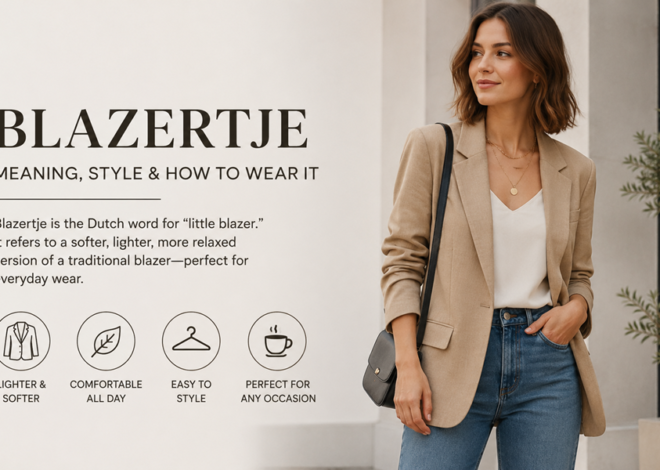

Blazertje: What It Means and How to Wear One in 2026
I bought my first blazertje almost by accident. A shop in Amsterdam, a rack I wasn’t even browsing, a saleswoman who used the word like I should already know it. I didn’t. Three years and probably six of these jackets later, here’s what I wish someone had told me before that first purchase, because Google mostly won’t.
Type “blazertje” into a search bar today and you get roughly the same article eight times over. Dutch word. “-tje” diminutive. Little blazer. Lighter fabric, looser fit. All correct. None of it explains how one actually differs from the blazer already hanging in your closet, which fabrics earn the name versus which ones are just a regular blazer with a trendy word slapped on the label, or the styling mistake that tripped me up for a solid year before I figured it out.
Where the Word Comes From(Blazertje)
Dutch, originally. Add “-tje” to nearly any noun in that language and you shrink it, soften it, make it sound friendlier. My Dutch coworker once explained it to me using “huisje” (little house) as the example, and it clicked instantly. “Blazer” becomes “blazertje.” Translate that literally and you land somewhere around “little blazer,” though the phrase alone undersells what’s really changed.
Forget the idea of a kids’ jacket scaling down an adult one. It’s closer to a blazer rebuilt from the ground up around comfort. Thinner padding where it used to matter most. Shoulders that give instead of fight back. Fabric that moves with you instead of holding a rigid shape for eight hours straight. Somehow the tailored silhouette survives that redesign. What doesn’t survive is the part that made me avoid wearing blazers casually in the first place.
What Actually Changes in the Construction
Most guides wave their hands here. “Softer.” “More relaxed.” Never any real explanation, and I only learned this part from an actual tailor who altered one of mine two winters ago.
Interfacing comes first, and it’s the boring detail nobody bothers explaining. Traditional blazers pack heavier interfacing through the chest and shoulders so the shape holds no matter how you move, sort of like a car frame under the body panel. Blazertjes go lighter, sometimes only partial interfacing, and that’s the real reason mine drapes instead of standing at attention on a hanger.
Shoulders matter just as much, maybe more. Padded, structured shoulders are basically what define a classic blazer’s whole silhouette. Take that away, go soft or unstructured, add maybe a whisper of padding if any, and a jacket suddenly feels like something you can move in rather than armor for a meeting. Mine has almost no padding at all, and I genuinely forget I’m wearing a blazer half the time.
Fabric weight shifts too. Classic blazers often run heavier wool built to last years under regular wear. Blazertjes lean lighter. Cotton blends. Linen blends. Increasingly, stretch fabric that traditional tailoring never touched until fairly recently. My oldest one is a cotton-linen blend, and it’s the one I reach for more than any of the others, four years in.
Length is the least consistent change, worth mentioning but not relying on. Plenty of blazertjes run shorter or cropped next to a standard hip-length blazer. One of mine doesn’t, so don’t treat this as a defining trait on its own.
Fabrics Worth Knowing Before You Buy
Skip whatever generic “cotton, linen, wool” list the last five pages gave you. Here’s what I’ve actually learned from wearing several of these through different seasons.
Cotton-linen blends hold their shape better than pure linen while still breathing well. If you’re only buying one, this is the safest bet, and it’s the one I recommend to friends who ask.
Ponte knit has quietly taken over the mid-range end of this category. I own one in ponte and it survived a 14-hour flight folded in a carry-on with zero wrinkles, which is more than I can say for anything else in my suitcase that trip.
Unstructured wool, sometimes sold under “washed wool,” gives actual warmth minus the stiffness. Closest thing to a genuine year-round option in this whole category.
One thing worth avoiding, learned the hard way: anything labeled simply “polyester blend” with zero further detail. I own one of these too, a regrettable impulse buy, and it already looks tired after maybe fifteen wears.
The Mistake Almost Everyone Makes
Nearly every article out there tells you to throw a blazertje over jeans and call the outfit finished. Fine advice, as far as it goes. Here’s where I personally went wrong for longer than I’d like to admit: layering it over something equally structured underneath. A stiff button-down. A fitted vest. Do that and you cancel out the entire reason this jacket exists.
Contrast is the whole point, and it took a friend pointing this out at a dinner before it actually sank in. Wear it over something soft instead. A t-shirt. A simple knit. A slip dress. Let the blazertje carry all the tailoring in the outfit by itself, with nothing else competing against it. Stack two structured pieces together and the look reads as trying too hard, which is the opposite of what this jacket is supposed to say about you.
When It Works, and When It Doesn’t(Blazertje)
Smart-casual dinners. A relaxed office. Travel days where you want to look pulled together without wrinkling five hours into a flight. That awkward in-between weather where a real coat feels like overkill. This is a blazertje’s home turf, and it’s where mine live in rotation.
Where it struggles is anywhere that genuinely calls for structure. I made the mistake of wearing one to a client presentation once, and while nobody said anything, I felt underdressed the entire meeting compared to colleagues in traditional blazers. A formal presentation, an interview at a conservative firm, anything black-tie adjacent, a real structured blazer still wins there. No real contest.
Blazertje vs. Blazer vs. Sport Coat
| Feature | Blazertje | Traditional Blazer | Sport Coat |
|---|---|---|---|
| Structure | Soft, little to no padding | Structured, padded shoulders | Structured, softer than a blazer |
| Fabric weight | Light to mid-weight | Mid to heavy | Mid-weight, often textured |
| Best for | Smart-casual, travel, layering | Business, formal events | Business-casual, seasonal wear |
| Typical length | Often slightly cropped | Standard hip-length | Standard hip-length |
Frequently Asked Questions
Is a blazertje just a cropped blazer by another name?
Close, not quite. Cropped only describes length. Blazertje describes the entire build, softer fabric, lighter interfacing, reduced structure, and it just happens to run shorter often enough that people conflate the two. Mine, for what it’s worth, isn’t cropped at all.
Can you wear one to an office job?
Creative or casual workplace, sure. Formal corporate environment, learn from my presentation mistake and stick with a traditional structured blazer instead.
What fabric should a first-timer buy?
Cotton-linen blend, or unstructured wool if budget allows. Both hold up across seasons far better than the cheaper polyester versions, which tend to look flimsy within a month of regular wear.
Is “Blazertje” an actual brand name?
No. It’s a style category. Dozens of brands make their own version of one, and I’ve bought from at least four different ones myself.
Bottom Line
A blazertje earns its popularity honestly, and I say that as someone who was skeptical the first time a saleswoman used the word on me. It solves a real, specific problem: wanting the polish of a blazer minus the discomfort that kept me from wearing one on a random Tuesday for years. Thinner padding, shoulders that move with you, fabric that actually breathes, that combination is doing the work. Not a shorter cut and a trendy Dutch word stitched onto a hangtag. Get the fabric right, get the styling contrast right, and this stops being a passing trend term. It becomes one of the more genuinely useful pieces sitting in your closet, the way it has in mine.