What Is Babeltee? The Customizable Tea Trend, Explained (2026)
So you’ve seen “Babeltee” floating around – maybe next to “bubble tea” in a search bar, maybe on someone’s story with a suspiciously photogenic drink in hand. Quick heads up before you go any further: it’s not a brand. There’s no store you walk into and order “a Babeltee.” Nobody owns the name, as far as anyone can actually prove.
What it is, is a lot simpler than the hype suggests. Pick a tea, add whatever you want to it, drink it. That’s basically the whole concept, dressed up in a name that sounds a lot more official than it is.
I’m going to walk through what the term actually covers, where the name probably came from, how it’s different from bubble tea (genuinely different, not just marketing spin), how to throw one together yourself, and – since half the articles floating around about this contradict each other what’s actually true versus what someone just typed with confidence.
The short version, if you’re in a hurry
Babeltee is an informal name for build-your-own tea — a base tea plus fruit, herbs, spices, or a sweetener, mixed to taste instead of following a set recipe. Nobody’s registered it as a company or product. It’s a style, not a brand.
What it actually is, once you strip away the branding
Here’s the thing nobody selling you on “Babeltee” wants to slow down and admit: there’s no fixed formula. You pick a base – green, black, white, herbal, whatever’s in your cupboard — throw in something for flavor, adjust it until it tastes like something you’d actually want to finish, and that’s it. There’s no company history behind it, no founder story, and no “established in” date anywhere that actually checks out.
A few sites out there write about it like it’s a real, trademarked beverage with a whole backstory. I looked. Nobody’s published anything on that beyond vague claims. What is consistent, oddly, across every source I checked, is the basic idea underneath all the noise: tea, built around what you actually want, not what a menu decided for you.
Where the name probably comes from
Nobody’s confirmed this, so take it as an educated guess rather than fact – but it’s not hard to piece together. “Babel” carries that idea of a bunch of different things converging into one place, the way the Tower of Babel gets used as shorthand for many languages colliding. Stick “tee” on the end – that’s just tea, in German, and a few Scandinavian languages – and you get something like “a convergence of teas.” Which, honestly, tracks pretty well with a drink that’s built around throwing different things together until it works.
Could be wrong. Nobody’s stepped forward with the actual etymology. But it’s a better guess than most of what’s floating around online right now.
Okay, but how is this actually different from bubble tea?
This is where people get tripped up, and fair enough — the names sound similar and both involve “customizable tea” as a selling point. But they’re not the same thing at all.
Bubble tea has an actual history. Taiwan, 1980s, well documented, still evolving today. It’s got a standard base too – usually black tea with milk — plus those chewy tapioca pearls everyone associates with it. You can walk into real, established chains for it in most major cities.
Babeltee doesn’t have any of that. There are no pearls, no single base tea that defines it, and no company you can actually point to. If bubble tea is a specific dish with a recipe card behind it, Babeltee’s closer to a cooking method – a way of putting a drink together, not a fixed result you’re chasing.
| Babeltee | Bubble Tea | |
|---|---|---|
| Origin | No documented source – emerged online | Taiwan, 1980s, well documented |
| Fixed recipe? | Not really — built to taste | Yes, roughly: black tea, milk, tapioca |
| Company behind it | None confirmed | Multiple established global chains |
| The “fun part” | Mixing your own flavors | Chewy tapioca pearls |
Tea bases and what actually pairs well
I’m not going to pretend there’s an “official” pairing chart, because there isn’t one. But some combinations just work better than others, based on how these teas actually taste.
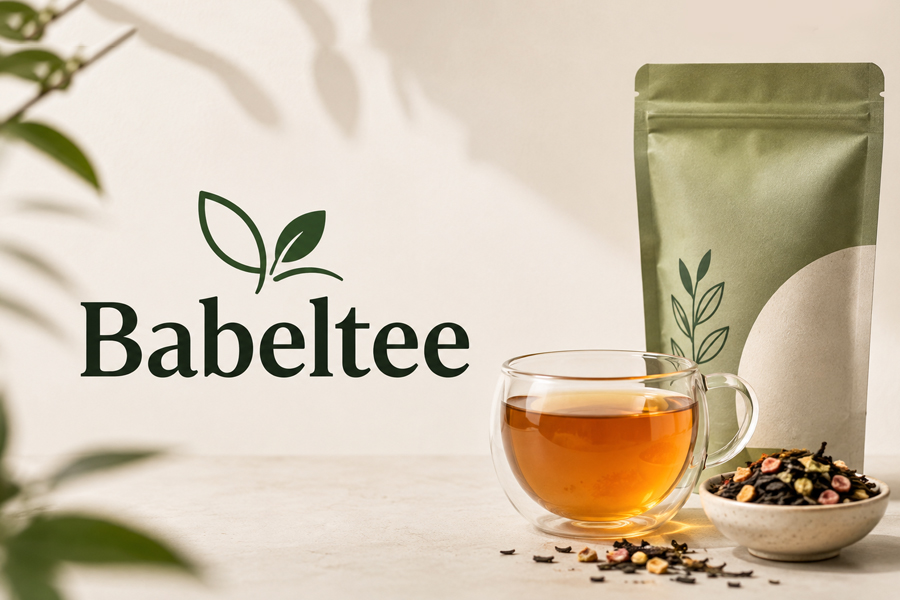
Green tea plays nicely with peach and ginger – keeps things light, a little grassy, refreshing without trying too hard. Black tea can handle bigger flavors like vanilla, cinnamon, or orange peel without losing them. It’s the boldest of the bunch, with the most caffeine to match. White tea is the opposite end — delicate, so pair it with something equally soft, like lemon or lavender, or you’ll just drown it out. Herbal bases (rooibos, chamomile, that whole family) are caffeine-free and forgiving, good with berries or a bit of mint if you want something calming rather than energizing. Oolong sits somewhere in the middle – smooth, a little toasty, and it does something genuinely nice with peach or honey.
Actually making one at home
Brew your base and let it cool a bit before you start adding things. Pour fresh fruit or lavender into scalding-hot tea and you’ll just wilt the flavor right out of it. Pick one dominant flavor rather than throwing in four competing ideas at once – peach-and-ginger reads a lot cleaner than peach-ginger-vanilla-mint all fighting for attention in the same cup. Add texture if that’s your thing — muddled berries, fresh slices, a splash of oat milk for something creamier. Sweeten slowly and taste along the way instead of measuring blind, since honey, simple syrup, and other sweeteners all behave differently depending on what tea they’re going into. Then decide: ice, for something refreshing, or keep it warm if that’s more your speed. Neither is more “correct” than the other — that’s kind of the entire point of a drink with no fixed rulebook.
So is this an actual brand, or just… a vibe?
Honestly, mostly a vibe. Based on what’s actually checkable – no registered company, no trademark, nothing that holds up as an established product with a single source behind it. Every mention I found describes it as a style of drink, not a specific thing you buy from a specific place.
That’s not automatically suspicious, to be clear. Plenty of food trends start exactly this way – “dirty soda,” “cloud coffee,” that whole genre of drink that’s more concept than company. It just means you shouldn’t assume there’s a “real” Babeltee brand out there somewhere if you’re trying to actually order or buy one. And if you run into a site telling you otherwise, with a confident little founding story attached – worth being a bit skeptical until they actually link to something that backs it up.
A word on health and sweeteners, briefly
Tea on its own – any of the main types – comes with decent hydration and naturally occurring antioxidants. That’s probably part of why a lower-sugar, build-it-yourself format has caught on with people trying to cut back on soda. If you’re reaching for a sugar substitute to keep things lighter, it’s worth actually knowing what you’re using – we’ve got a breakdown on Aspertaan that covers how one common sweetener is regulated, decent background before you start experimenting with your own blends.
Not medical advice, to be clear — if caffeine or sweeteners are a real concern for you specifically, that’s a conversation for an actual doctor, not a drink trend explainer.
This isn’t exactly new, either
Drinks built around personal ritual and customization aren’t a new idea – they show up across a bunch of different cultures in different forms, from shared brewing traditions to actual drinking games built around one drink. We wrote about one example, Çbiri, and the thread connecting it to Babeltee is basically the same one: people like drinks that involve some input from them, not just whatever a menu decided they should have.
Why now, though?
A few things lining up at once, probably. People cutting back on soda and heavily sweetened coffee drinks. Social platforms that reward anything colorful and visually distinct, which a build-your-own tea absolutely is. And a broader shift toward personalized food in general — build-your-own bowls, custom smoothies, and now, apparently, custom tea. Babeltee sits right at the overlap of all three, which probably explains the search interest even without any single company pushing it.
FAQ
Can I actually buy Babeltee somewhere? Not as one branded product from one confirmed company – no. Think of it as a style you build yourself rather than something with a single retail source.
How’s it actually different from bubble tea? Bubble tea has real history, a standard recipe, and established brands behind it. Babeltee has none of that – it’s a flexible, build-it-yourself approach rather than one fixed drink.
Does it have caffeine? Depends what tea base you start with. Green, black, white, oolong – all have caffeine. Herbal blends like rooibos or chamomile don’t.
Can I make it myself? Yeah, that’s genuinely the whole idea. Brew a base, throw in fruit or herbs or spice, adjust the sweetness, taste as you go.
Is it healthier than bubble tea? Often, mostly because you’re controlling the sweetener and skipping the tapioca pearls, which do add sugar and calories in a standard bubble tea. Though – depends entirely what you put in it. Load it up with syrup and it’s not automatically healthier just because there’s no boba.
Where’d the name even come from? Not confirmed anywhere official, but it likely combines “Babel” (a bunch of things converging) with “tee” (tea, in German and a few Scandinavian languages) – which fits a drink built around mixing different elements together.
Is there a real company behind it? No – nobody’s documented one anywhere I could verify. Be a little skeptical of any site claiming a specific founding story without linking to something that backs it up.
Best base to start with if I’m new to this? Green or oolong, probably – mild enough to pair with almost anything without getting overpowered, which makes them easier to experiment with before you move on to bolder black tea combinations.