
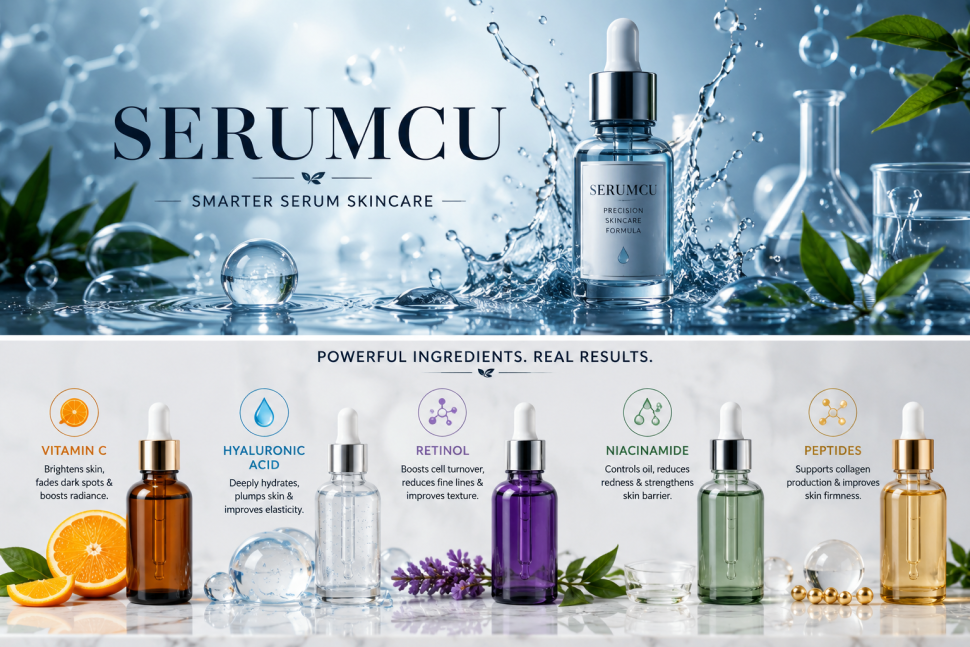
Serumcu: The Complete Guide to Smarter Serum Skincare
What Is Serumcu?
In simple words, Serumcu is all about making smarter skincare choices instead of following every new trend. Serumcu comes from Turkish. “Serum” is that concentrated skincare liquid loaded with actives, and “-cu” is a suffix that basically means someone tied to a particular thing — a specialist, a devoteeWhen you combine these two things you basically get someone who really loves serums, a company that’s all about serums or someone who uses serums all the time.
To be honest the word serum does not really mean what it used to mean anymore. If you look at skincare websites or comments, on TikTok you will see that people use the word serum to talk about all sorts of things like skincare formulas or the people who make videos about serums.. The common thread, though, is precision. Nobody using this term is talking about a ten-step routine with five different serums stacked on top of each other. It’s the opposite — one well-chosen formula doing a job a cream simply can’t do as fast.
There’s also a bigger shift happening underneath all this. People are tired of vague marketing copy. They want to know what’s actually in the bottle and whether it does anything. Serumcu is really just a name for that impulse.
Why Serumcu Focuses on Serums Instead of Moisturizers
Here’s the thing nobody tells you about moisturizer: it’s mostly doing surface workMoisturizers lock in hydration and strengthen your skin barrier, but they don’t carry active ingredients deep into your skin. That’s exactly where Serumcu makes a difference by encouraging people to choose one well-targeted serum instead of using products without a clear purpose.
Serums are different because their molecules are smaller. They actually get down where collagen is made, where pigmentation starts, where the visible signs of aging begin. That is the point of using a serum at the right time of day.Vitamin C is really good in the morning because it helps protect your skin from the sun and pollution.Retinol or peptides are great at night because they work on your skin while you are sleeping and they help fix your skin by rebuilding collagen and making your skin smoother.
The Vitamin C serum in the morning and the Retinol or peptides serum, at night are a combination. A lot of dermatologists will tell you actives just perform better in serum form — higher concentration, deeper reach.
The Ingredients Worth Your Money
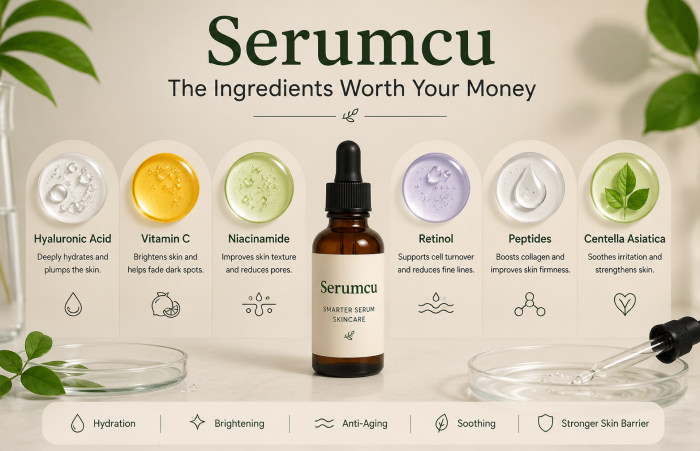
Not every serum on the shelf deserves a spot in your routine. A handful of ingredients actually have the research to back them up.
Hyaluronic acid is your hydration workhorse — it can hold an enormous amount of water relative to its weight, and skin genuinely looks plumper within days of using it consistently.
Vitamin C is really good for making your skin look brighter. If you use it all the time you will see that the dark spots on your skin will start to fade and your skin tone will become more even. It also helps keep your skin safe from damage caused by the sun and pollution.
Retinol is still the thing to use if you want to stop your skin from aging. It does a job of making your skin cells turn over faster and it also helps your skin make more collagen. Vitamin C and Retinol are both good for your skin. Retinol is especially good, for anti-aging because it helps your skin in these ways.
Peptides work differently — they’re more about structure, signaling skin to make more collagen and elastin, which hydration alone won’t do.
And niacinamide is the one that does a bit of everything: oil control, calmer redness, a stronger barrier. Good pick if your skin’s on the sensitive or combination side. This ingredient-first approach is one of the reasons why Serumcu is gaining attention among skincare enthusiasts.
How to Build a Serumcu Skincare Routine
Most people who “don’t see results” from serums aren’t using bad products — they’re applying them wrong. A few things matter more than people realize.
Start with clean skin. A gentle cleanser clears away the buildup that would otherwise block absorption. Then apply your serum while skin’s still a little damp — pores are more receptive right after cleansing. Three or four drops is plenty. Press it in, don’t rub, and give it about a minute before moving on to the next step.
Mornings need SPF 30 or higher after your serum, full stop. There’s no point doing all that work if you’re going to undo it walking to your car. At night, seal things in with a moisturizer so the actives keep doing their job while you sleep.
And give it time — six to eight weeks, realistically, before you’ll see the payoff. Most people give up right around week four, which is almost always too soon.
How Serumcu Matches Serums to Your Skin Type
Picking the wrong serum for your skin type is probably the number one reason people write serums off entirely.
If you’re oily or acne-prone, go lightweight and water-based — niacinamide or salicylic acid will do more for you than anything heavy.
Dry or dehydrated skin wants hyaluronic acid, paired with a ceramide-rich moisturizer to actually lock that hydration in. Panthenol is worth adding too if you can find it.
Sensitive skin should keep things minimal — fragrance-free, calming ingredients like centella asiatica or green tea extract, and definitely don’t stack too many actives at once.
Mature skin tends to respond best to a combination — retinol, peptides, and vitamin C working together over several weeks to hit texture, firmness, and tone all at once.
Who Actually Gets Something Out of This
This isn’t reserved for one type of person. Beginners get a much less overwhelming way to learn what ingredients actually do instead of guessing off packaging. People with acne finally move away from generic drugstore fixes toward something targeted. Dry and sensitive skin types benefit from the slower, more deliberate approach — nothing gets thrown at the skin all at once. And even people who’ve been doing skincare for years tend to pick up something new, since formulations keep evolving. No matter where you are in your skincare journey, Serumcu makes it easier to find a serum that truly suits your skin.
Where Most Routines Go Wrong
A few habits quietly wreck people’s results, over and over:
Mixing retinol and vitamin C in the same routine is a common one — irritation is almost guaranteed for most people. Keep vitamin C for mornings and retinol for nights.
Piling on too many actives at once overwhelms the skin barrier before it can even get used to one. Start with a single targeted serum, give it two or three weeks, then consider adding more.
Skipping sunscreen while using brightening or exfoliating actives is a mistake that can genuinely backfire — you end up making the UV sensitivity worse and can undo whatever progress you’d made on pigmentation.
And applying serum to completely dry skin instead of slightly damp skin cuts down absorption more than you’d expect. It’s a tiny habit change with a real payoff.
How This Compares to Regular Skincare
Traditional creams stay on the surface — that’s not a knock against them, it’s literally what they’re designed to do. They protect the barrier, they lock in moisture. What they generally can’t do is reach pigmentation, collagen loss, or textural issues at a meaningful depth.
Serums don’t replace that step, they work with it. Cleanser, then optional toner, then serum, then moisturizer, and SPF if it’s morning. Each layer earns its place, but the serum is usually doing the heaviest lifting.
| Feature | Traditional Skincare | Serum-Focused Approach |
| Product Selection | General | Personalized |
| Ingredient Knowledge | Basic | Detailed |
| Skin Analysis | Minimal | Central |
| Active Ingredients | Occasional | Priority |
| Long-Term Results | Moderate | Strong |
| Learning Curve | Low | Ongoing |
Comparing two products at a similar price point, the serum usually wins on visible results simply because it’s carrying a higher concentration of actives. That’s just formulation, not hype.
A Few Things Worth Remembering
Know your skin type before you buy anything. Introduce actives one at a time. Actually read the ingredient list instead of trusting the front label. Patch test first. Apply to damp skin. Wear sunscreen daily without exception. Give any new product a full six to eight weeks before judging it. Don’t over-layer. And track progress with monthly photos — day-to-day comparisons will drive you crazy and tell you nothing useful.Keeping these simple tips in mind will help you get the most out of your Serumcu routine.
The Trade-Offs
This approach offers real benefits. It helps you understand your skin, avoid unnecessary purchases, save money, and get more from the active ingredients you use.
That said, it does take patience — you won’t see anything dramatic in the first week or two. Learning ingredients takes a bit of upfront effort. Quality serums cost more than a basic drugstore cream. And no single formula works for every single person, so some trial and error is just part of the process. Like any skincare routine, Serumcu works best when you stay consistent and give your skin enough time to respond.
What is Next for This Kind of Skincare
People are getting really tired of using the old skincare routines that do not really work. This is making them look for skincare that is made for their skin problems. Dermatologists and estheticians are saying the thing: choose one or two skincare serums that really work for your skin and do not bother with the rest of the stuff. This kind of skincare is about using the right ingredients to get the results you want. Skincare should be simple. It should work. People want to see results from their skincare and that is why they are looking for skincare that is made with good ingredients. Skincare like this is going to be big because people are tired of wasting their time and money on skincare that does not work. This kind of skincare is the future because it is, about using skincare serums that really matter.
This doesn’t feel like a trend that fades with the next viral product — it’s grounded in how skin actually responds to concentrated actives versus broad, surface-level formulas. Brands are catching on too, with cleaner formulations and clearer labeling than they used to bother with.
Bottom Line
If your routine isn’t giving you what you want, another moisturizer probably isn’t the answer — a better serum strategy might be. This works because it’s specific: it goes after what your skin actually needs instead of throwing everything at the wall.
Pick one serum for your main concern. Commit to it for six to eight weeks. Pair it with sunscreen in the morning, a moisturizer at night, and a cleanser that doesn’t strip your skin. That’s really the whole system. Better skin usually isn’t about buying more — it’s about using the right thing, consistently, for long enough that it actually matters.
Serumcu FAQs
What does Serumcu actually mean? It’s less a fixed definition and more a mindset — serum expertise, ingredient awareness, choosing products on purpose.
Can beginners use this approach? Definitely. If anything, it’s easier for beginners since it simplifies the decision-making instead of overwhelming them with options.
Will it clear up my acne? Not on its own — it’s not a treatment — but it does help you find serums actually suited to acne-prone skin.
How often should I apply a serum? Once or twice a day usually, depending on what’s in it and what the brand recommends.
Do I need to spend a lot? No. Plenty of budget-friendly serums perform well — the goal is finding the right one, not the priciest one.
When will I actually see a difference? Give it six to eight weeks of consistent use. Some people notice sooner, some later — skin type plays a role.
Why does everyone seem to be talking about this now? Because people increasingly want proof, not promises, and this approach is built around exactly that.